





Key takeaways
- Check the ingredients first. Chamomile, rooibos and peppermint infusions are naturally caffeine-free when made from these ingredients alone.
- Look beyond the name. Some bedtime blends contain green, black or white tea, which naturally contains caffeine.
- Choose a flavour you enjoy. Floral, minty and earthy teas each offer a different evening experience.
- Keep brewing simple. Use the recommended water temperature and steeping time to get the best flavour from your tea.
- Make it a ritual. A warm cup, softer lighting and a few quiet minutes can create a natural transition from a busy day to a slower evening.
What is bedtime tea?
Bedtime tea is a tea or herbal infusion chosen for the evening, often because it is caffeine-free and has a gentle, enjoyable flavour. Unlike traditional green or black tea, many herbal infusions can be enjoyed without caffeine, making them an appealing choice for people who prefer to avoid stimulants later in the day.
The term bedtime tea describes when and how people enjoy a brew, rather than one specific type of tea. A cup of chamomile, a smooth rooibos infusion or a simple peppermint brew can all fit into an evening routine.
Think of it as changing the pace at the end of the day. Just as you might dim the lights or put your phone aside, preparing tea can become a small signal that your busy hours are winding down.
It is worth remembering that caffeine-free tea is not a guaranteed sleep aid. Its value may simply be the comforting taste, warmth and quiet moment it brings to your evening.
1. Choose a naturally caffeine-free tea
When choosing bedtime tea, start with the ingredient list rather than the product name. A blend labelled “evening tea” or “night-time tea” is not necessarily caffeine-free.
For a simple starting point, consider these three options.
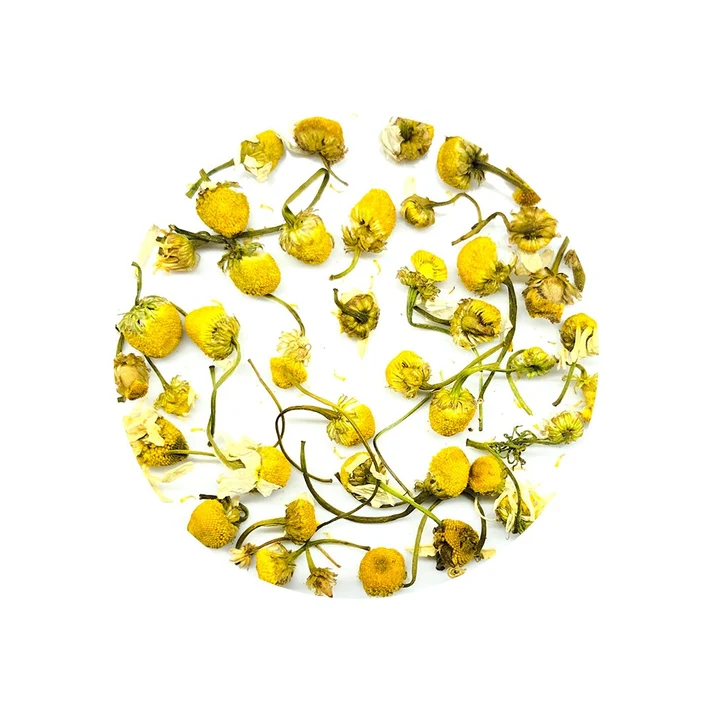
Chamomile tea: Light and floral
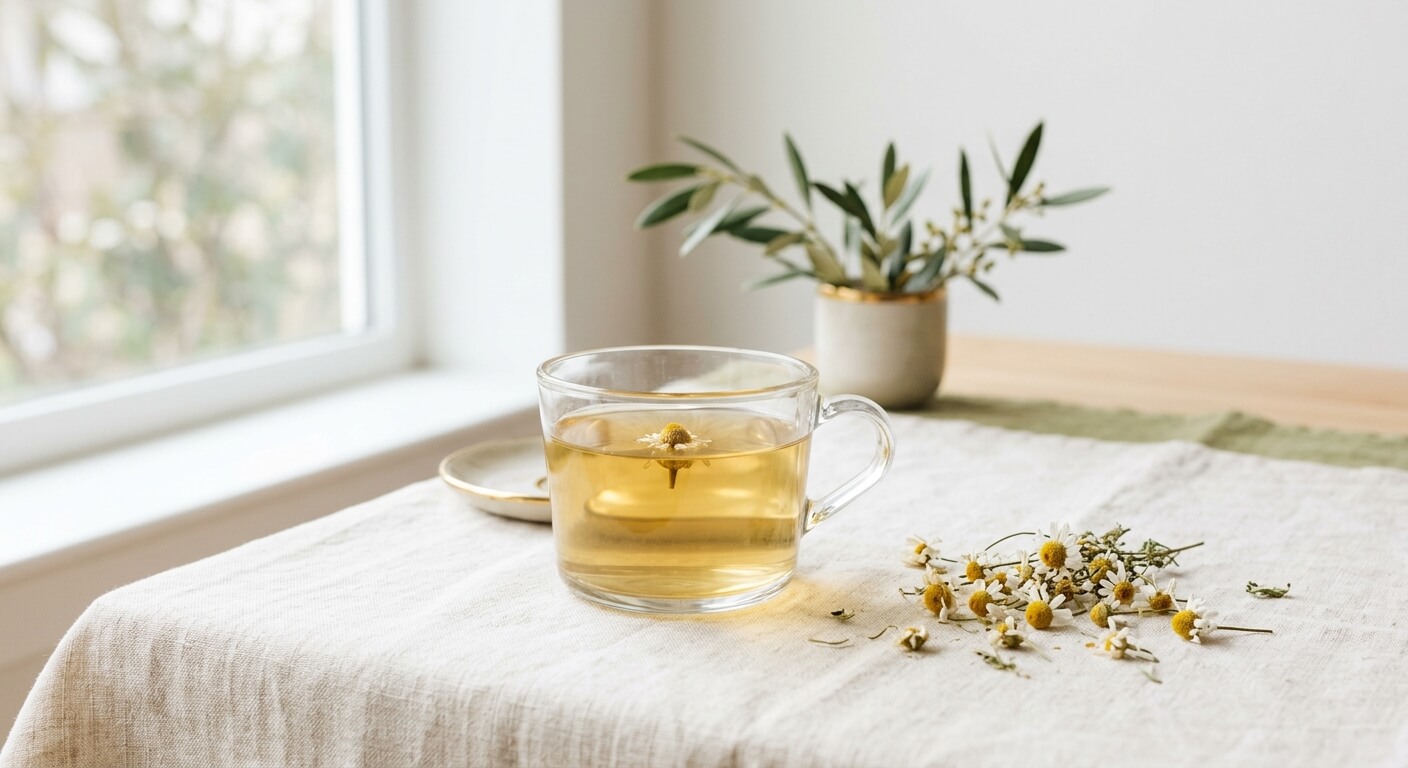
Chamomile is known for its delicate floral aroma and gentle, slightly sweet flavour. It is a familiar choice for people who enjoy a light herbal infusion in the evening.
Its soft profile pairs well with a quiet activity, such as reading a few pages of a book or writing down tomorrow’s priorities. If you prefer a tea that feels delicate rather than rich, chamomile may suit your taste.
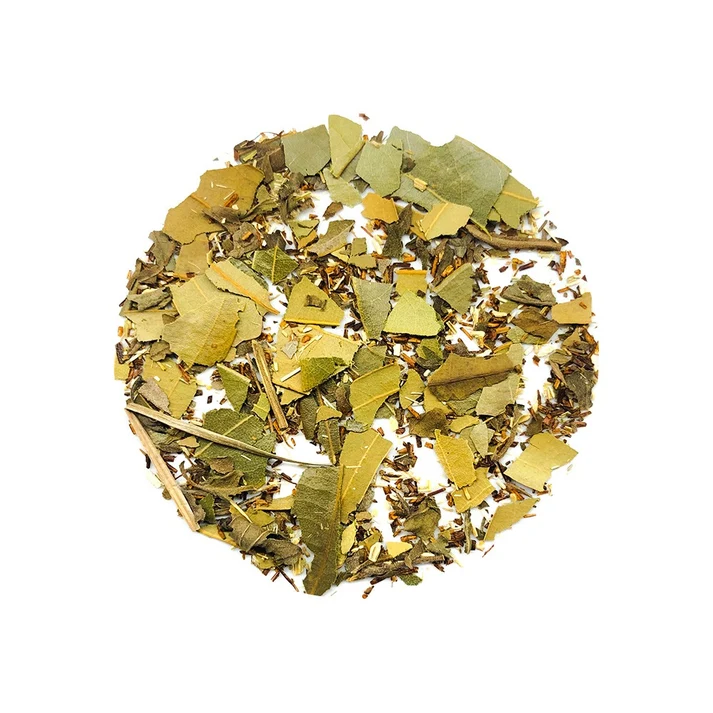
Rooibos tea: Smooth and earthy
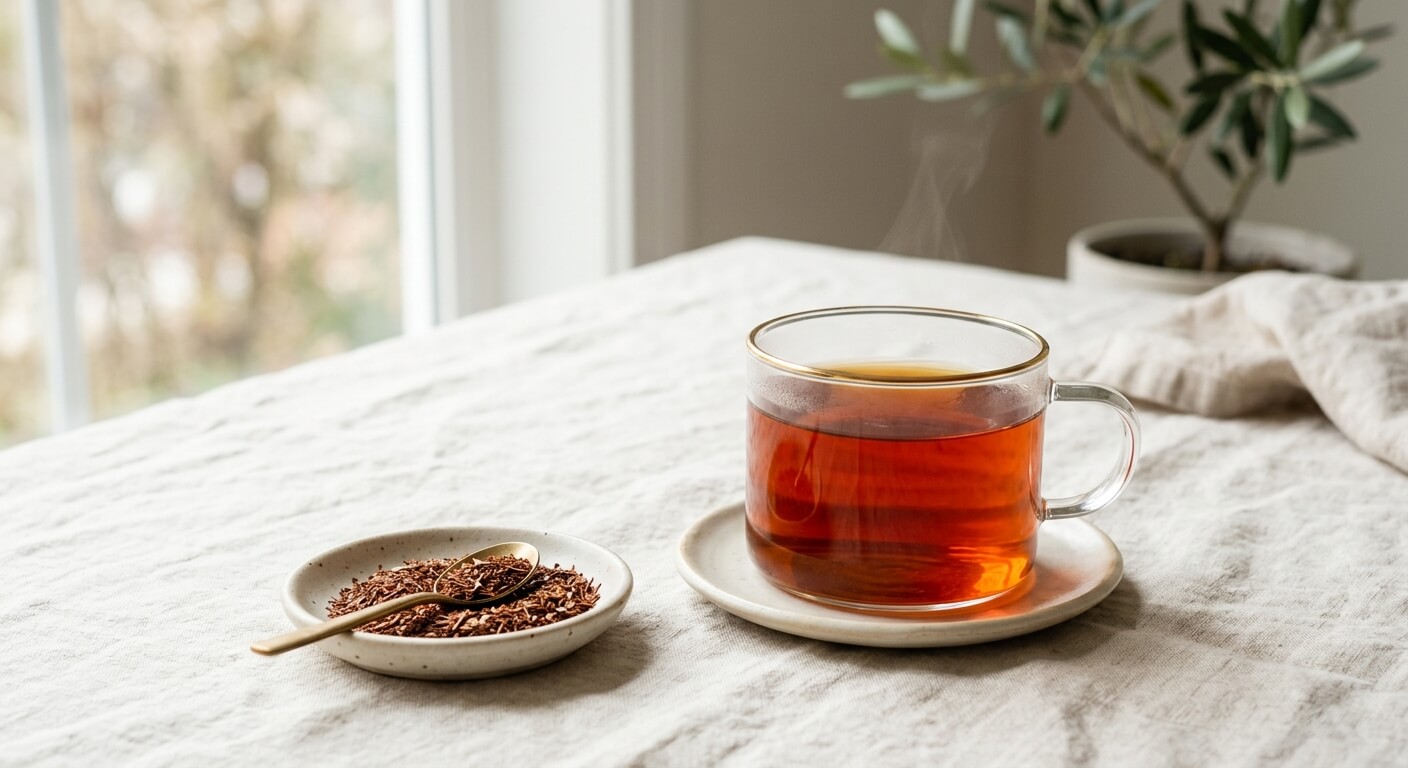
Rooibos is made from the leaves of a South African plant and is naturally caffeine-free. Its flavour is generally smooth, rounded and earthy, with a warm character that works well on its own.
Rooibos can be a good option if you want something with more body than a delicate floral infusion. Imagine the difference between a light broth and a fuller, roasted flavour: both can be enjoyable, but the choice depends on what feels satisfying to you.
Peppermint tea: Fresh and minty
Peppermint infusion has a bright, cooling flavour that feels different from the softer notes of chamomile or rooibos. It may appeal to people who prefer a clean, minty finish after dinner.
Its refreshing taste can be especially enjoyable when you want an evening drink without sweetness. However, peppermint may aggravate reflux for some people, so consider your own preferences and sensitivities.
A simple rule: Chamomile offers a floral profile, rooibos brings earthy warmth, and peppermint delivers a fresh minty finish. Choose according to taste rather than assuming one is universally better than another.
2. Understand what “caffeine-free” really means
Not every tea suitable for an evening routine is free from caffeine. Traditional tea leaves from Camellia sinensis contain caffeine, including the leaves used to make green, black, white and oolong tea.
Some blends combine these leaves with herbs, flowers or spices. Even when a blend includes chamomile or another herbal ingredient, it may still contain caffeine if traditional tea leaves are part of the recipe.
Use this quick comparison when shopping.
| Tea type | Naturally caffeine-free? | Typical flavour |
|---|---|---|
| Chamomile infusion | Yes, when made from chamomile alone | Floral and delicate |
| Rooibos infusion | Yes | Smooth and earthy |
| Peppermint infusion | Yes, when made from peppermint alone | Fresh and minty |
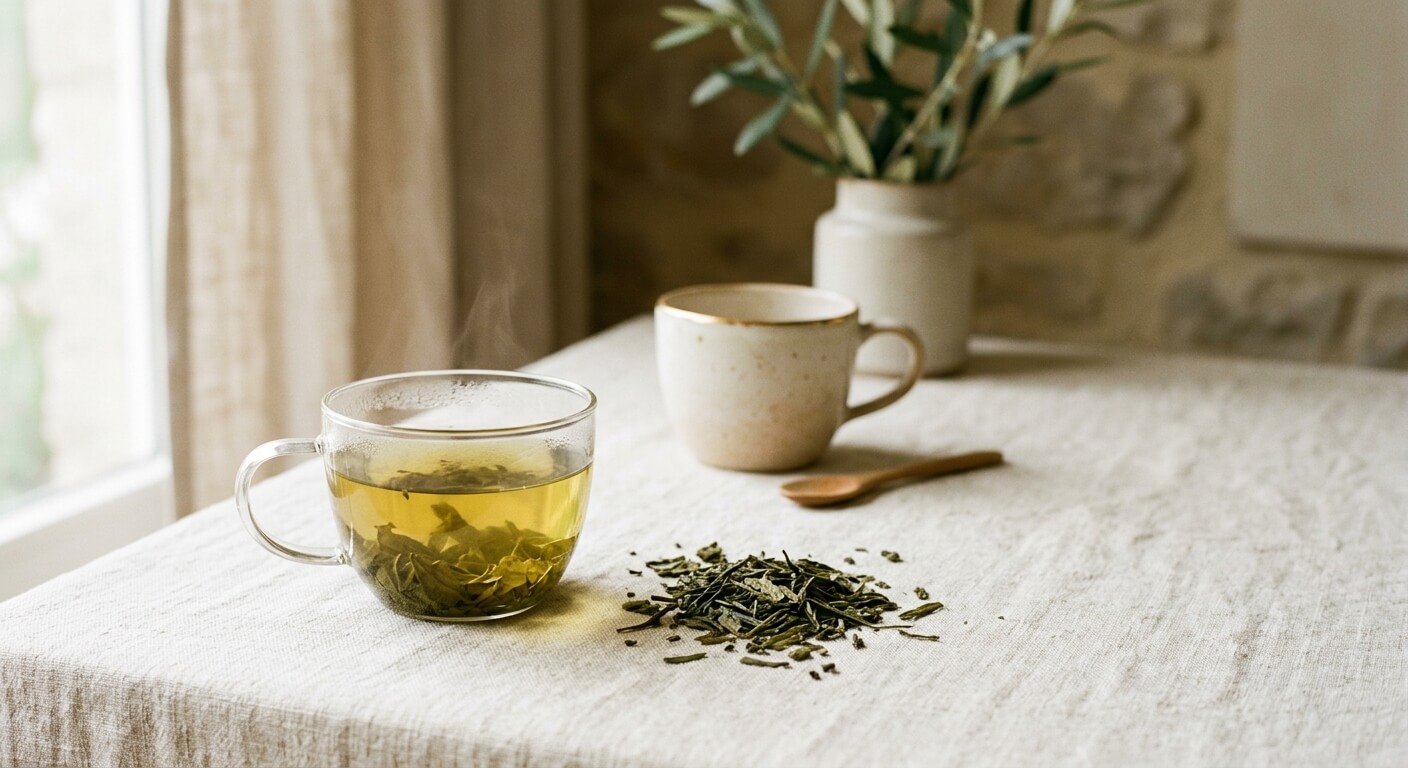
| Green tea | No | Fresh, grassy or vegetal |
| Black tea | No | Bold and malty |
| Herbal blend | Depends on the ingredients | Varies by blend |
Your bedtime tea label checklist
Before buying an evening brew, check:
- The full ingredient list: Look for green tea, black tea, white tea, oolong, yerba mate or guayusa if you are avoiding caffeine.
- The caffeine statement: Look for clear wording on the package. If the ingredients or caffeine status are unclear, ask the manufacturer.
- The blend composition: A product can combine caffeine-free herbs with caffeine-containing tea leaves.
- Any added ingredients: If you have allergies, take medication or have specific dietary considerations, review the ingredients carefully.
Decaffeinated tea is another category, but decaffeination does not always remove every trace of caffeine. If your goal is to avoid caffeine entirely, a clearly labelled infusion made from naturally caffeine-free ingredients is often the simpler option.
3. Match the flavour to your evening mood
The best bedtime tea is one you genuinely look forward to drinking. Rather than choosing a blend based on a promise, think about the flavours and aromas you find comforting.
Use this simple flavour guide to narrow down your options.
| If you prefer… | Consider… | Why it may suit you |
|---|---|---|
| Light, floral notes | Chamomile | Delicate aroma and a gentle taste |
| Smooth, rounded flavours | Rooibos | Earthy character and fuller body |
| Fresh, cooling notes | Peppermint | A clear minty finish |
| A more complex herbal flavour | A caffeine-free herbal blend | Different herbs can create a layered cup |
Your surroundings can influence the experience, too. A floral infusion may feel fitting while reading beside a softly lit window, while a fuller rooibos brew may be just right for a quiet evening on the sofa.
There is no single flavour that defines bedtime tea. Treat the first few cups as a tasting exercise: notice the aroma, the strength of the brew and the finish. Over time, you can identify what you enjoy most.
4. Brew your evening tea for better flavour
You do not need complicated equipment to make a satisfying cup of bedtime tea. A mug, hot water and a few unhurried minutes are enough.
The most important details are the amount of tea, water temperature and steeping time. Follow the package instructions first, since different ingredients and blends may require different brewing conditions.
A simple five-step evening tea ritual
Step 1: Choose your tea.
Pick a naturally caffeine-free infusion that matches your flavour preference. Keep the ingredients visible so you can check the blend easily.
Step 2: Heat fresh water.
Use the temperature recommended on the packaging. Some delicate ingredients benefit from cooler water, while many herbal infusions are brewed with freshly boiled water.
Step 3: Let it steep.
Follow the suggested steeping time. Too little time may leave the flavour weak; too much can make certain ingredients taste overly strong.
Step 4: Create a quieter setting.
Place your phone aside, lower the lights if you like, or sit somewhere comfortable. The goal is not to create a perfect routine, but to make a little space for yourself.
Step 5: Drink it slowly and comfortably.
Give yourself a few minutes to enjoy the aroma and warmth. Let the cup be a pleasant part of your evening rather than another task to complete.
One practical tip: Watch the timing
If drinking a large mug immediately before bed means you need to get up during the night, try enjoying your tea earlier in the evening or choosing a smaller serving.
The ritual should fit your life. A cup enjoyed while tidying the kitchen or finishing a book can be just as meaningful as one prepared in a dedicated tea corner.
5. Make bedtime tea part of a realistic routine
A calming evening does not have to involve a long checklist or a complete lifestyle change. A simple, repeatable habit is often easier to maintain than an elaborate routine.
You could prepare your tea after dinner, set aside ten minutes to read, or use the time while the tea steeps to write down anything you want to remember for tomorrow. Choose one small action that feels natural, then repeat it when it suits you.
For people in Canada, this can be especially appealing during colder months, when a warm herbal infusion offers a comforting pause at home. During warmer weather, a smaller serving or an earlier evening cup may fit better.
Keep expectations realistic, too. Caffeine-free tea does not guarantee better sleep, and individual responses to herbal ingredients can vary. If sleep difficulties persist or affect your daily life, tea is not a substitute for appropriate professional advice.
A bedtime ritual works best when it feels like an invitation, not an obligation. You do not need the perfect cup, the perfect setting or a fixed schedule. You only need a small moment that makes slowing down easier.
Conclusion: Find your bedtime tea ritual
Choosing bedtime tea begins with a straightforward decision: look for a naturally caffeine-free infusion, check the full ingredient list and choose a flavour you enjoy. Chamomile, rooibos and peppermint are useful places to start, each offering a distinct aroma and taste.
From there, keep the experience simple. Brew your tea according to the package directions, find a comfortable spot and give yourself a few quiet minutes to enjoy it.
At Santuals, we believe everyday self-care can begin with small, thoughtful moments. Explore our tea collection to find a brew that fits your evening preferences, and make your next cup a gentle pause at the end of the day.
Explore our Evening Teas Collection.
Frequently asked questions
1. What is the best tea to drink before bed?
There is no single best tea for everyone. Chamomile, rooibos and peppermint are popular caffeine-free options, provided the infusion contains only those ingredients and other caffeine-free components. Choose based on flavour, ingredient transparency and personal preference rather than expecting a particular tea to guarantee sleep.
2. Which teas are naturally caffeine-free?
Chamomile, rooibos and peppermint infusions are naturally caffeine-free when prepared from those ingredients alone. Many other herbal infusions are also caffeine-free, but blends vary. Always read the ingredient list, especially when a product combines herbs with green, black, white or oolong tea leaves.
3. Can I drink green tea before bed?
Green tea naturally contains caffeine, so it may not be the best choice if you want to avoid caffeine in the evening. People vary in their sensitivity to caffeine. If you prefer a completely caffeine-free evening drink, consider a clearly labelled herbal infusion instead.
4. How long before bed should I drink bedtime tea?
There is no universal timing that works for everyone. You might enjoy your tea after dinner or during an earlier evening break. If drinking fluids close to bedtime interrupts your sleep with bathroom trips, try a smaller cup or move your tea ritual earlier.
5. Does bedtime tea help you sleep?
Caffeine-free tea can be part of a relaxing evening routine, but it does not guarantee better sleep. A quiet setting, a familiar ritual and a flavour you enjoy may make the evening feel more settled. Persistent sleep problems deserve appropriate professional advice rather than reliance on tea alone.
6. Is decaffeinated tea the same as caffeine-free tea?
No. Decaffeinated tea has had much of its caffeine removed, but it may still contain small amounts. Naturally caffeine-free herbal infusions, such as pure rooibos or chamomile, are a different category. If avoiding caffeine is important to you, check the package wording and ingredient list carefully.